Spectrum VHF handheld programming

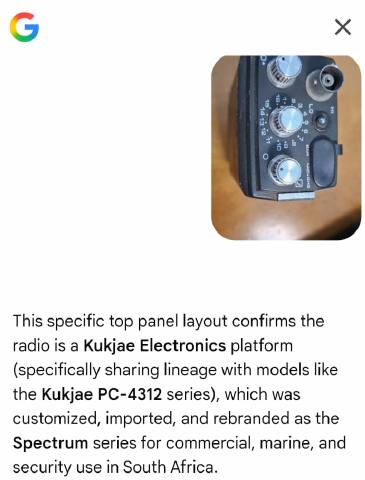
A friend gave me two “Spectrum” VHF handhelds. No model number on the radios, the battery packs are “Model N91A”. AI assisted image seach came up with “Kukjae PC-4312”. For what _that_’s worth.
Anyway, I figured these would make good APRS radios for some of my vehicles, provided I could move them to 144.800.
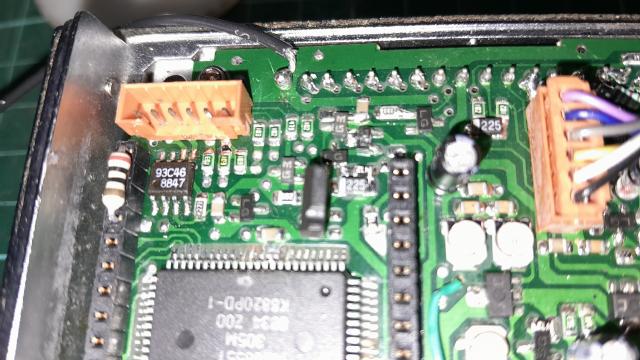
Opening it up revealed a 93C46 EEPROM connected to a header and from there via resistors to the MB88551 4 bit mask ROM CPU. Obviously the idea is to program the EEPROM while the CPU is not looking, while the resistors prevent a clash. Some more digging revealed that the 93C46 is actually a rotated package, just to make life more interesting I guess.

Anyway. Broke out PulseView, hung it on the wires, turned the radio on, changed channels. The Microwire decoder worked fine, but the 93C46 decoder got confused, so I had to read the bits.

On startup (channel switch on channel 9):

     543210 0123456789abcdef 
1 10 001000 0000000000000000 0x08
1 11 111110 0101101110110010 0x5BB2

1 10 011000 0000000000000000 0x18
1 11 111110 0101100101101010 0x596A

1 10 101000 0000000000000000 0x28
1 11 111110 0000000000000000 0x0000

1 10 110000 0000000000000000 0x30
1 11 111110 0010100100000000 0x2900

1 10 110001 1111111111111111 0x31
1 11 111110 1011101110111011 0xBBBB

1 10 110010 0000000000000000 0x32
1 11 111110 1011101110111011 0xBBBB

1 10 010000 0000000000000000 0x10
1 11 111110 0101100101100100 0x5964

1 10 100000 0000000000000000 0x20
1 11 111110 0000000000000000 0x0000

Let me explain. The top line is the data to the EEPROM, “10” is read, then there’s a 6-bit address. The zeros or ones after that don’t matter, this is where the data gets clocked out on the second line. So it’s reading location 0x08, 0x18, 0x28, etc., all in 16-bit mode.

Change to channel 9:

1 10 001001 1111111111111111 0x09
1 11 111110 0101101110101010 0x5BAA

1 10 011001 1111111111111111 0x19
1 11 111110 0101100101100010 0x5962

1 10 101001 1111111111111111 0x29
1 11 111110 0000000000000000 0x0000

Same thing, reading locations 0x09, 0x19, ox29. First guess: receive PLL parameters, transmit PLL parameters, unknown (but zero for all channels) parameters (call ’em “flags” for now).

On startup, it reads the selected channel parameters and then a further 5 parameters. Two of these are the receive VCO frequency and flags for channel 1, maybe it’s like a priority channel. The other three, your guess is as good as mine.

Now to find out what frequencies these parameters map to. Transmit is easy, dummy load and frequency counter. Receive was more tricky, I had to disassemble the sandwich to get to a point on the VCO, soldered a wire there, re-assembled, frequency counter — and found that it was the transmit frequency. Repeated the whole process, found the receive oscillator. Put it all in a spreadsheet, started looking at the data, and found that one channel had the two frequencies separated by 10.7MHz. Ha! This channel is simplex. The other channels were all 7.05MHz split repeater channels.

So now I knew that 0x5D50 and 0x56A0 both mapped to 149.300, with a 10.7MHz difference. The difference is 0x6B0, decimal 1712, and 10.7MHz / 1712 is 6.25kHz, yea I might actually be on to something.

Some more spreadsheeting and the answer is, the parameter in hex is the VCO frequency in 6.25kHz quanta. Also, the first 16 parameters are the transmit frequencies and the next 16 parameters are the receive VCO frequencies.

OK, that was the easy part.
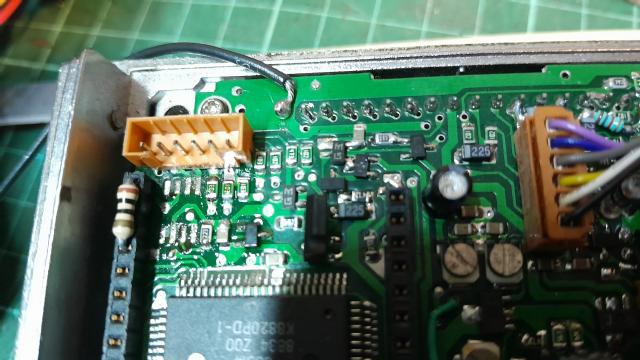
The EEPROM came out easily enough, then I had to solder it to a socket (just like last time, but rotated), stick it in my EEPROM programmer, read the data, edit the data, write the EEPROM, unsolder it from the socket and put it back on the PCB.
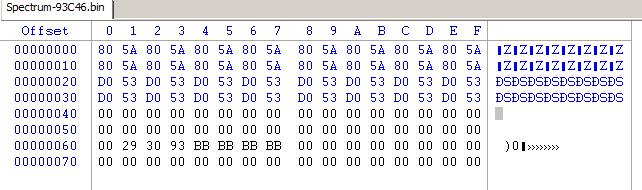
0x5A80 and 0x53D0 are the magic numbers I came up with to get to 144.800. And hey, it seems to work.
 

Florence and Pisa

Accommodation in Florence is expensive. But I found a really large apartment (two bedrooms, two bathrooms, large kitchen, large living room) in Montecatini Terme for about R1300/night and €60 buys you a five day train pass (which, just putting it out there, was not once checked by anyone anywhere…) so that worked out well.

The high-speed train runs from Naples to Florence, so we got off there, stored our suitcases (not cheap) and headed off into the city.

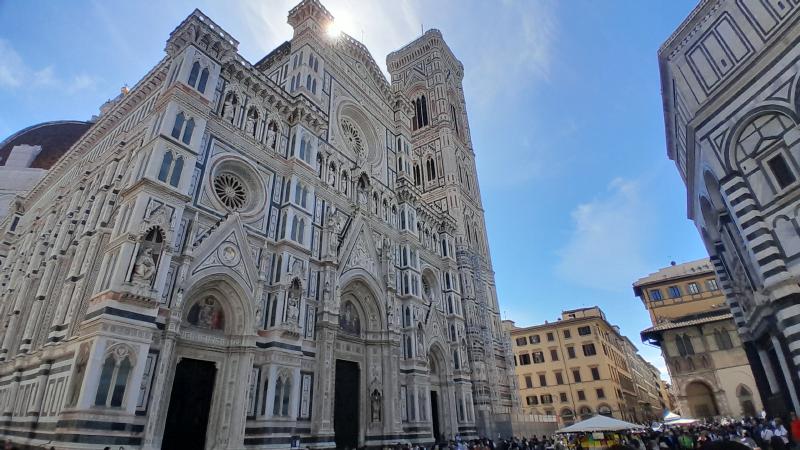
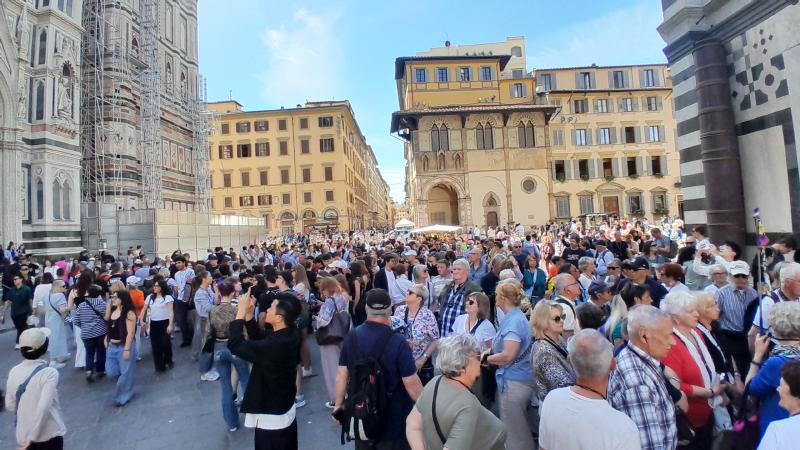
You can find many pictures of Florence online. The Duomo is magnificent. The queue is too long though, and we were not even there in high season. Crazy.

The east gate is apparently something to behold, but as you can see from the pic above, they were renovating and one can’t get close to it.


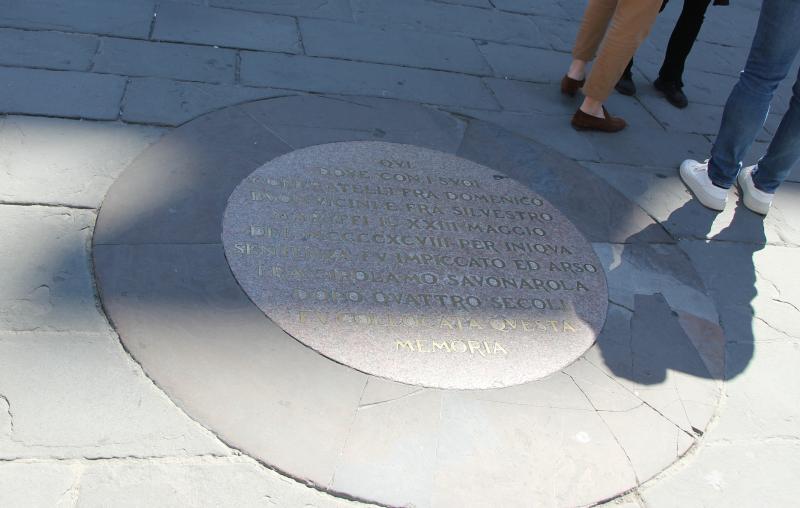
On Piazza Della Signoria, this spot between the Neptune fountain and the Loggia marks the Bonfire of Vanities as well as the spot where Girolamo Savonarola was hanged and burned alive a year and a bit later, in 1498. An early case of FAFO.

We specifically went to the small square in front of the Casa di Dante museum to find this profile of Dante’s face carved into the pavement. Apparently nobody knows who did it or when. Also, supposedly, it’s always wet.

Anyway, plenty pictures online. We came for the food.

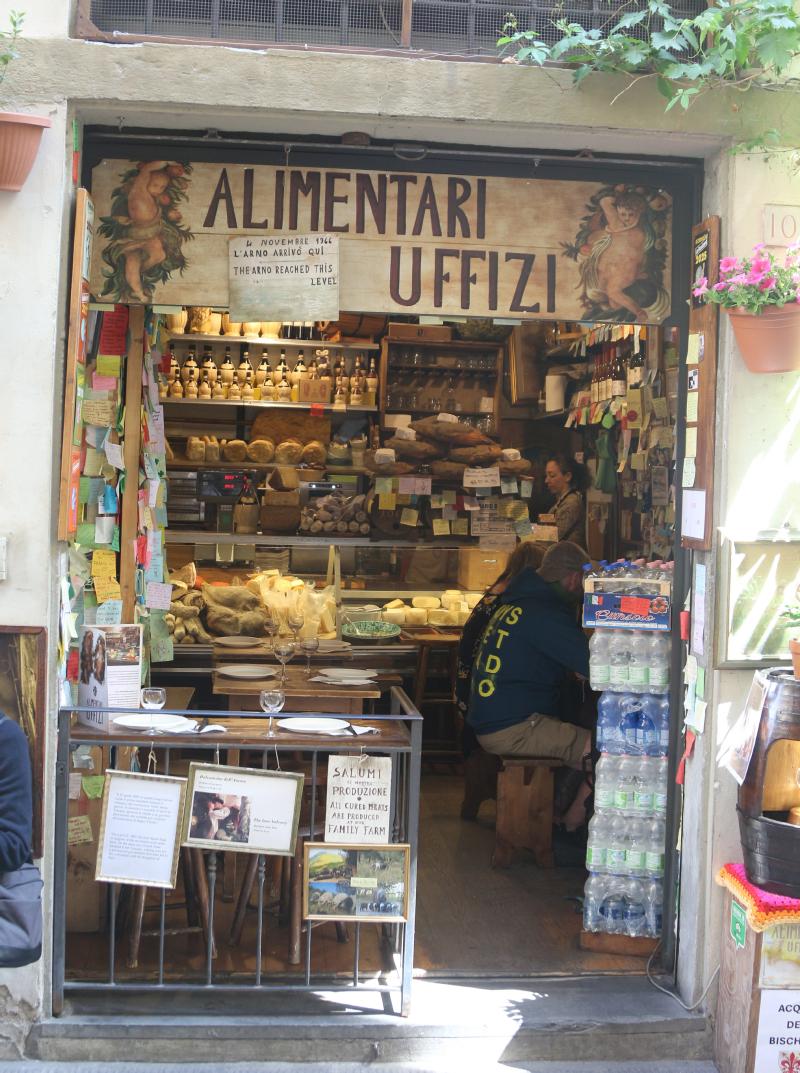
This is Alimentari Uffizi. It’s maybe a hundred meters from the Loggia. It seats about 16 people inside, maybe a few more on the pavement. We got there, they had space.

I proceeded to eat myself into a state.

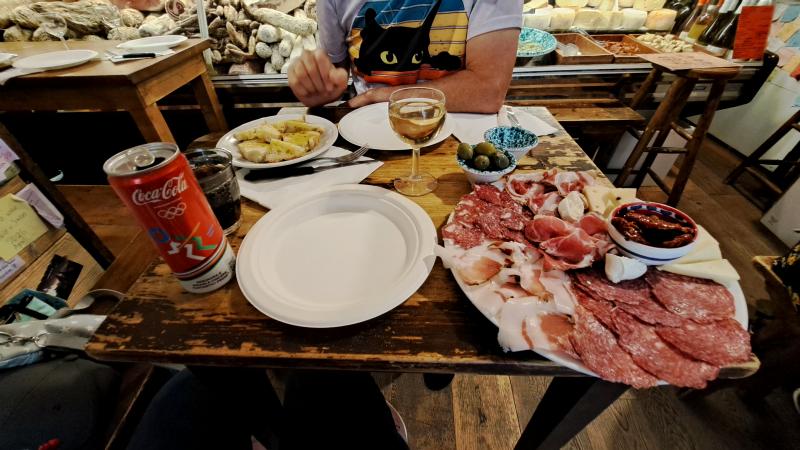
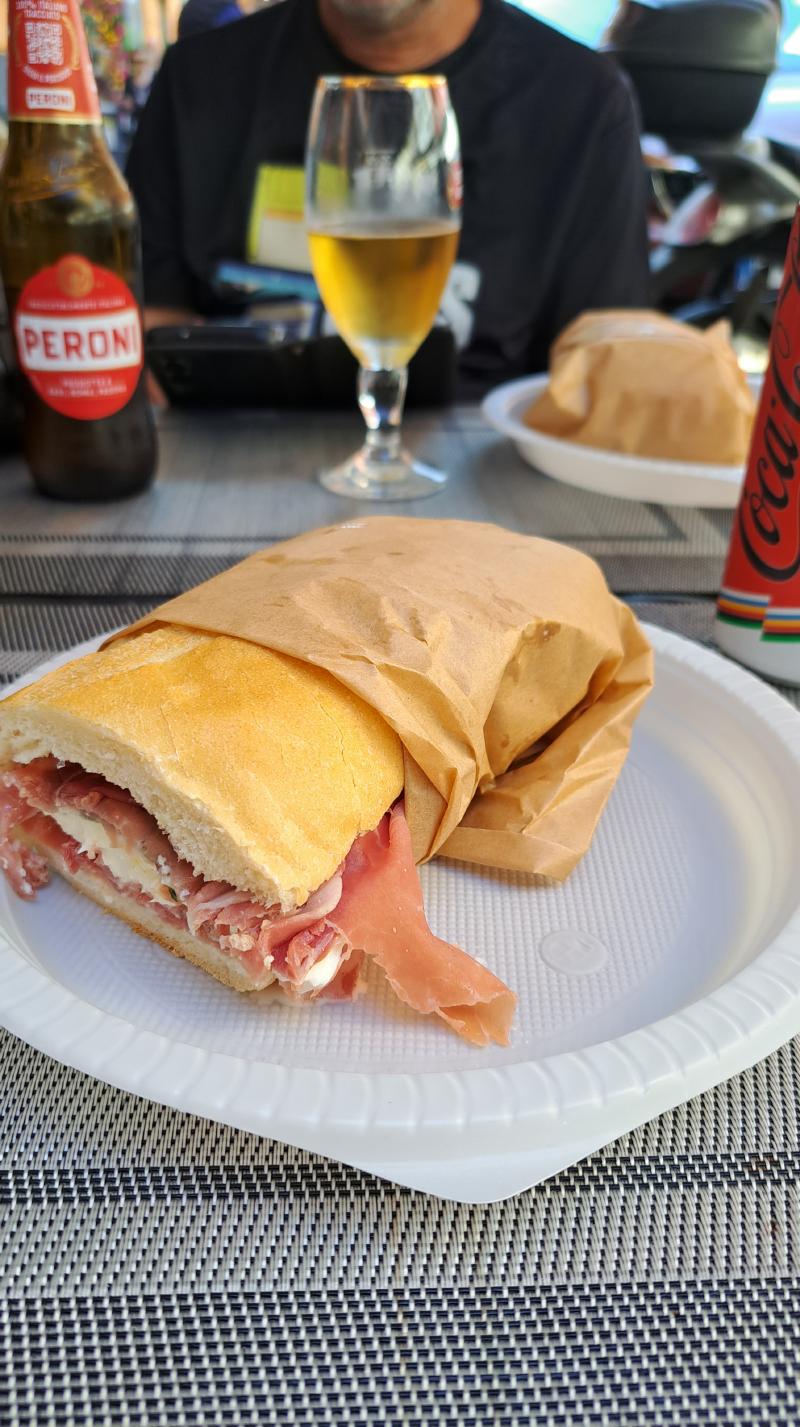
Meat and cheese platter, bread, olives, a glass of Caspriano Toscana Bianco and a coke, then we had the Vin Santo & Cantucci, as well as something similar to Becherovka (but Italian, of course). It all came to €51 (they do take cards) and it’s worth it. Go.

Now the problem with all of this is that it broke me. I have a condition* where if I eat too much, I then can’t eat again for… days, sometimes. So after Alimentari Uffizi I ran out of appetite. Couldn’t get into the Lampredotto (which one gets from Trippaio del Porcellino on Piazza del Mercato Nuovo, piccante e salsa verde) at all.

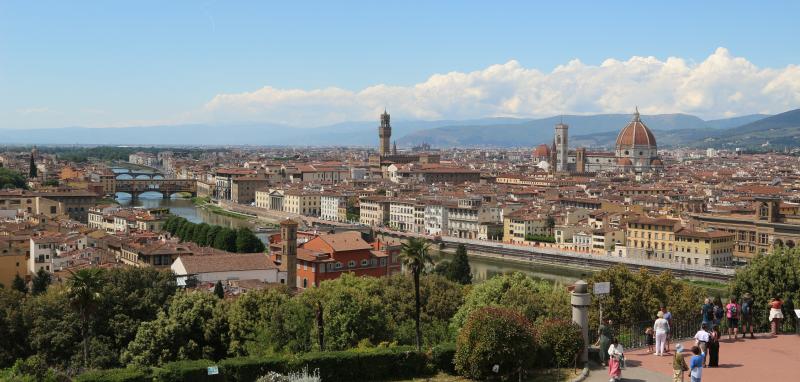
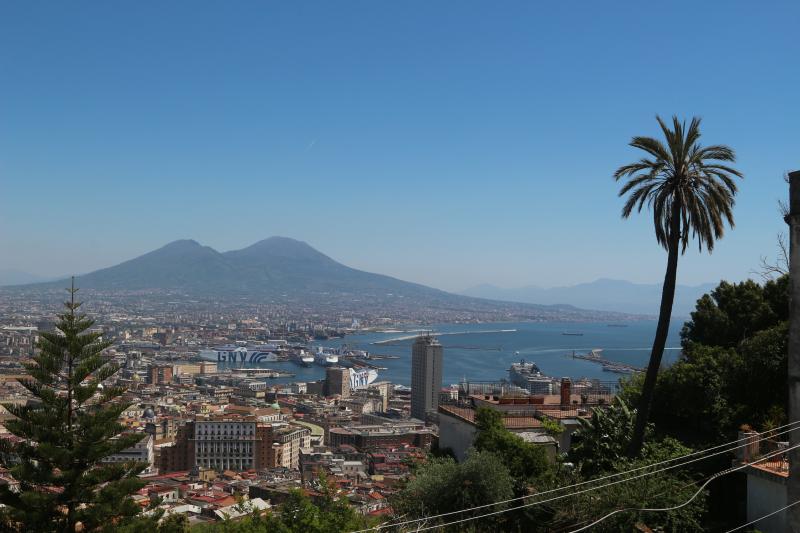
So we took the bus to the Piazzale Michaelangelo to appreciate the view.

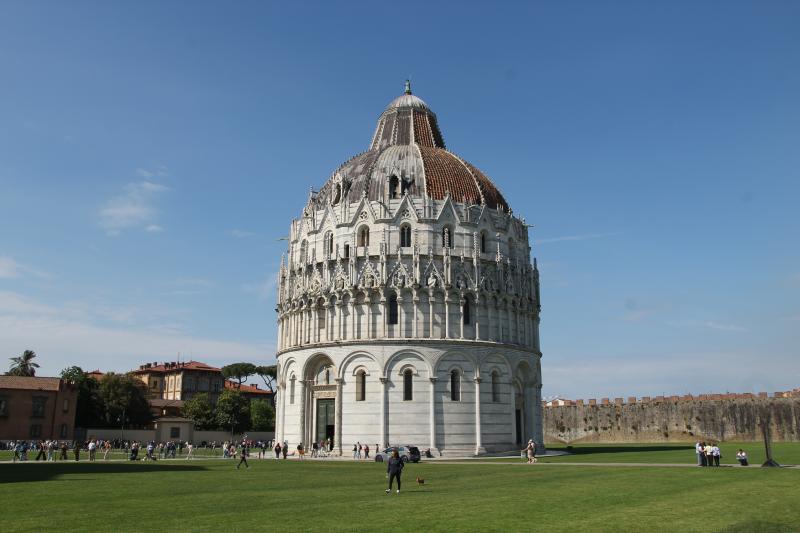
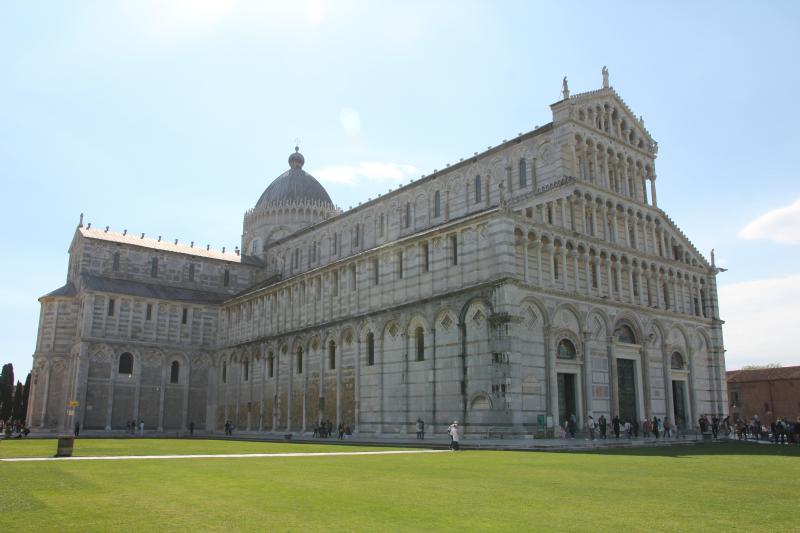
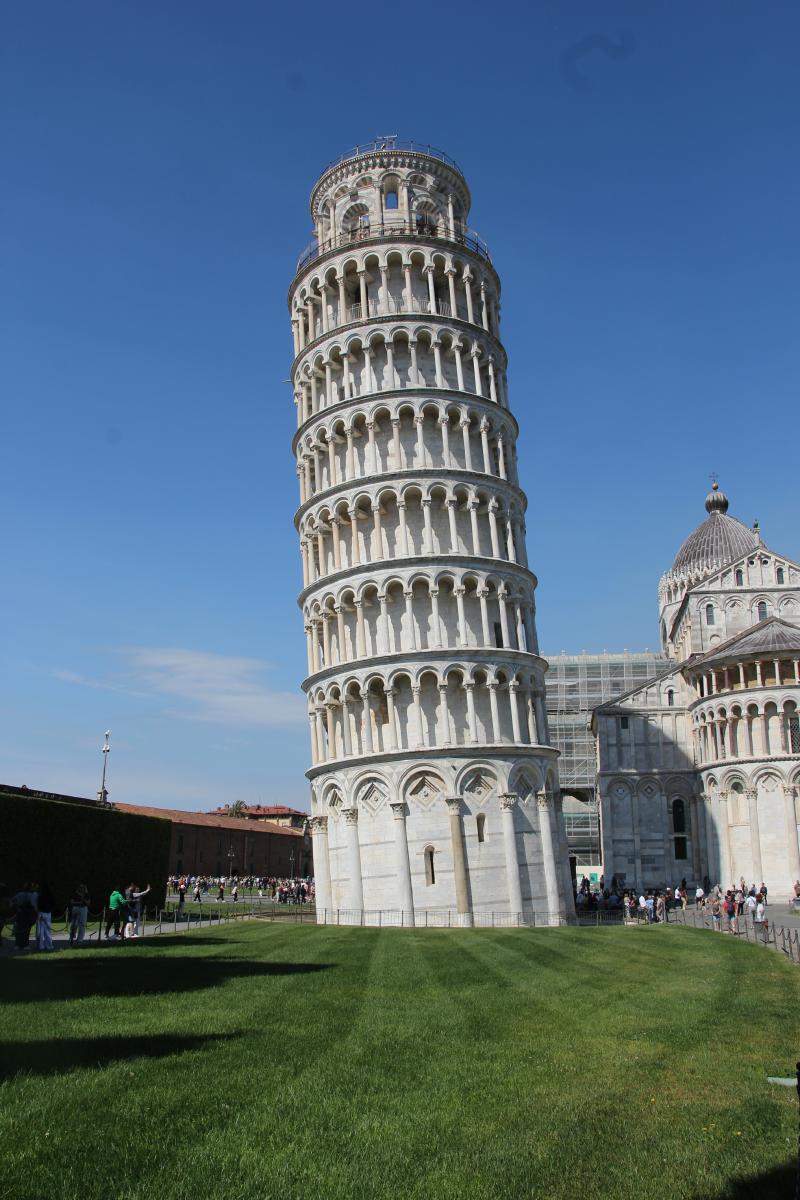
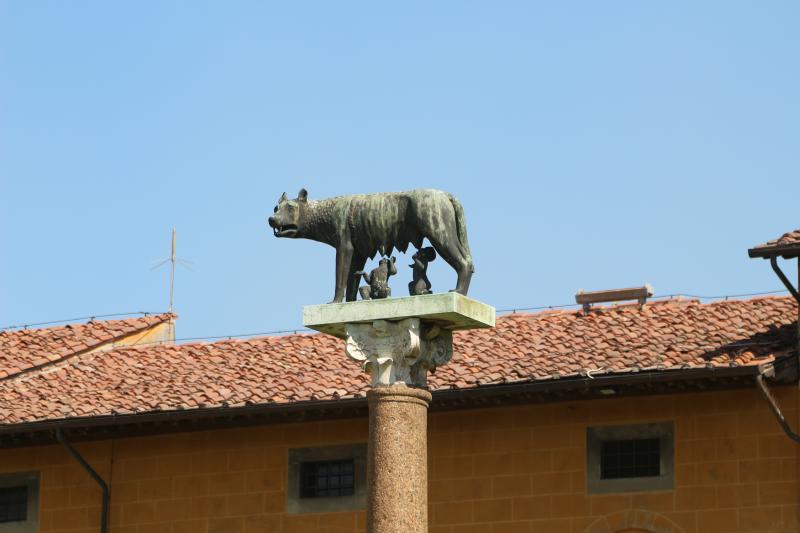
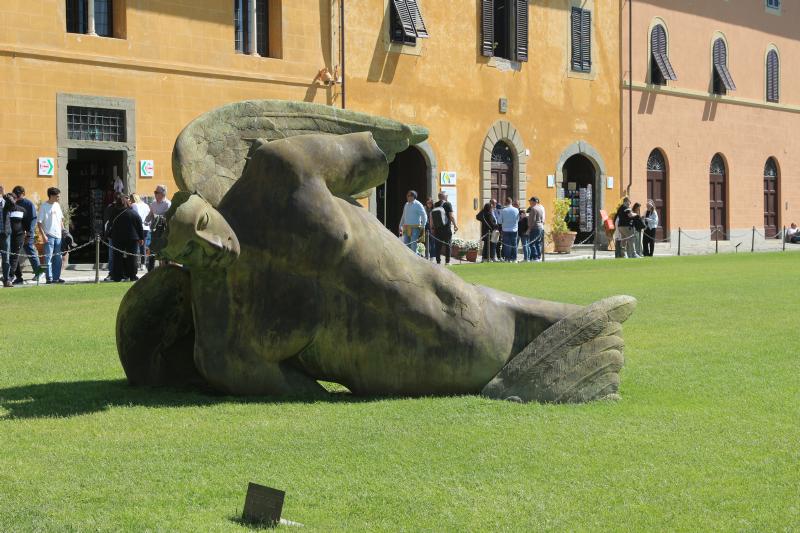
Florence is a pretty place, will go there again. Next day we took the train the other way, to Pisa. Impressive place.


* Reduced glucose tolerance, and no it’s not diabetes, I’ve had it pretty much since I was born, and it’s actually getting better not worse.

Naples

Naples is busy, dirty, noisy, and has graffiti everywhere. And I can’t recommend it enough.

OK, so it was Tanya and me and inexpensive (R10500 return pp) Turkish Airways tickets into Napoli and out of Ljubljana, 23 April to 29 May.

Outbound we had what I consider the best seats in the plane, right at the back, 42J and K (42A/B is maybe better).

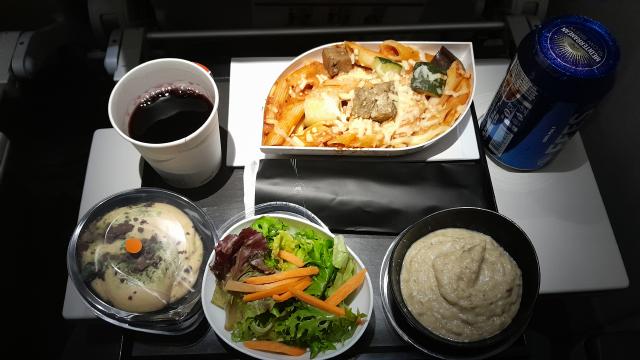
However… if there’s a thunderstorm so rough that the pilot has to divert around it… it gets a bit bouncy in the back. Also, you get your food last, which meant we got what was left after they ran out of chicken and beef (the vegetarian option, pasta with eggplant and zucchini, and not bad at all).

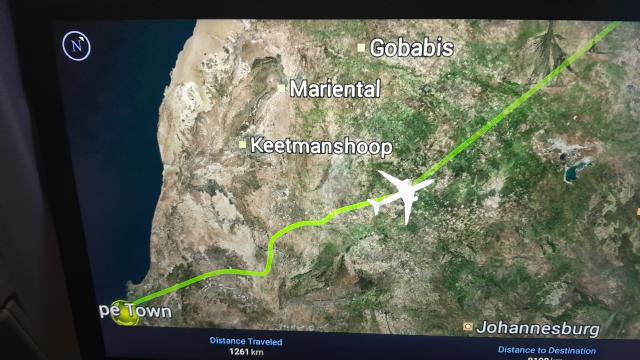
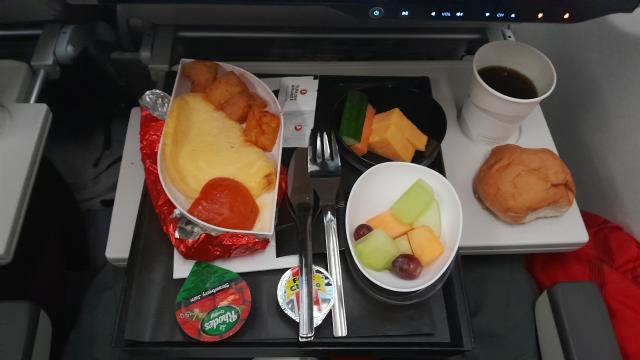
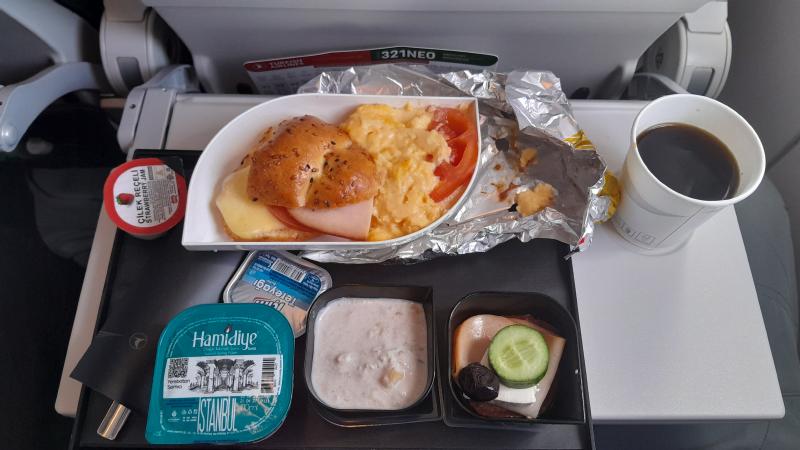
“Breakfast” was an omelette with potato and again, quite good for airport food. This was served at just after 01:00 SA time, because we were pulling into Istanbul, where we had to walk a mile, clear securty, walk another mile, and get on the short-hop plane, where they fed us again (it’s a 2 1/2 hour flight to Naples).

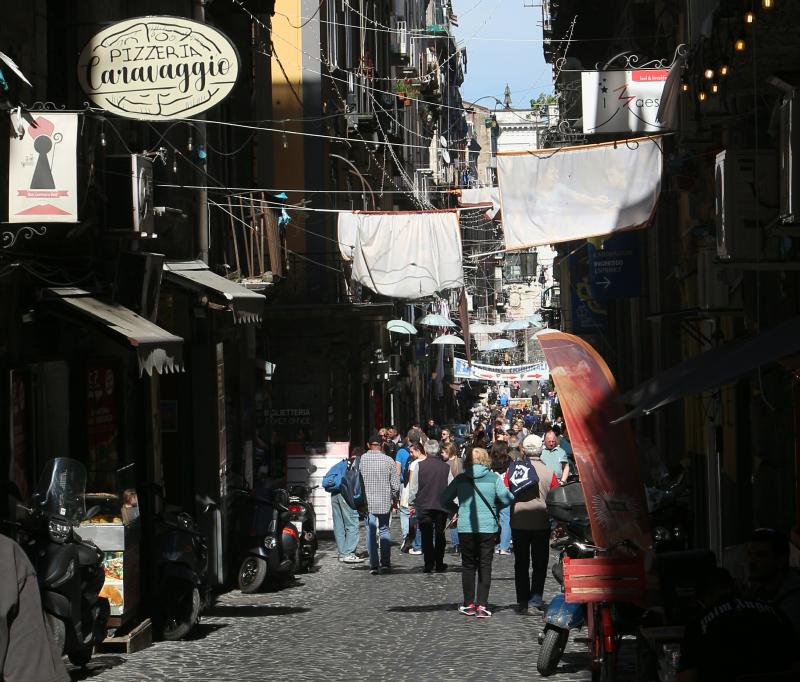
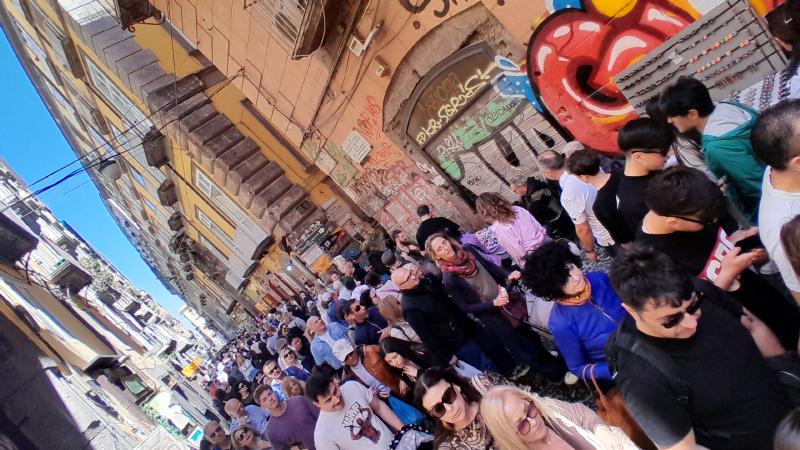
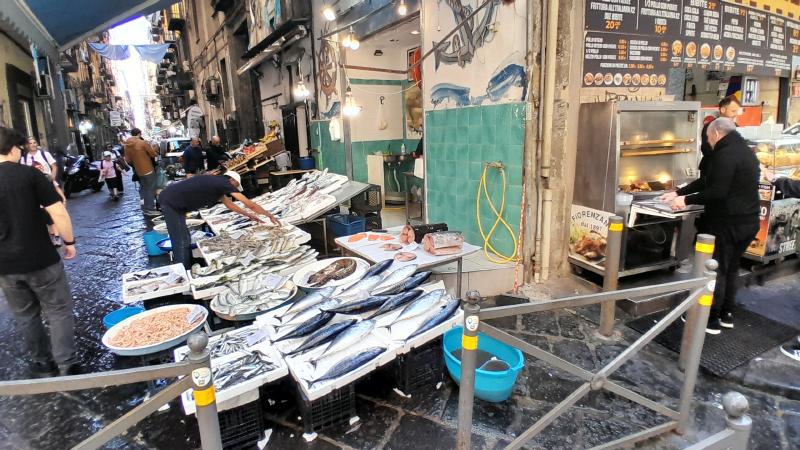
Anyway, Naples. I had found cheap (well, affordable, four nights for under R4000, or €60 a night) accommodation right in the middle of Spaccanapoli. What I didn’t know was that this was Liberation Day weekend. It was loud, and busy, and crazy.

Insane.

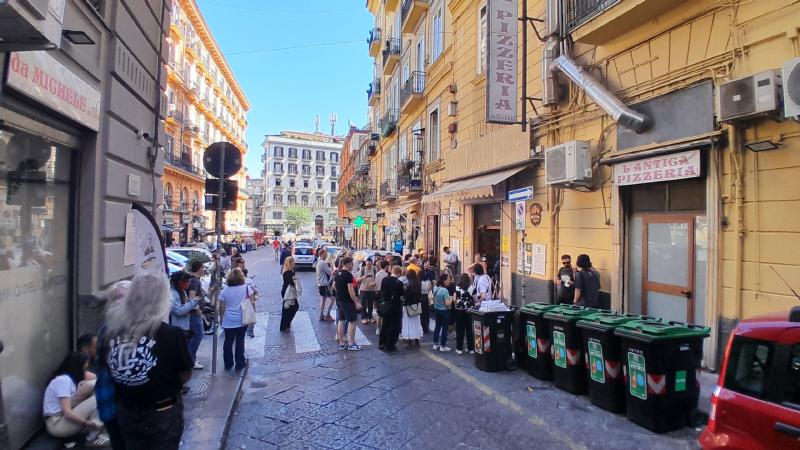
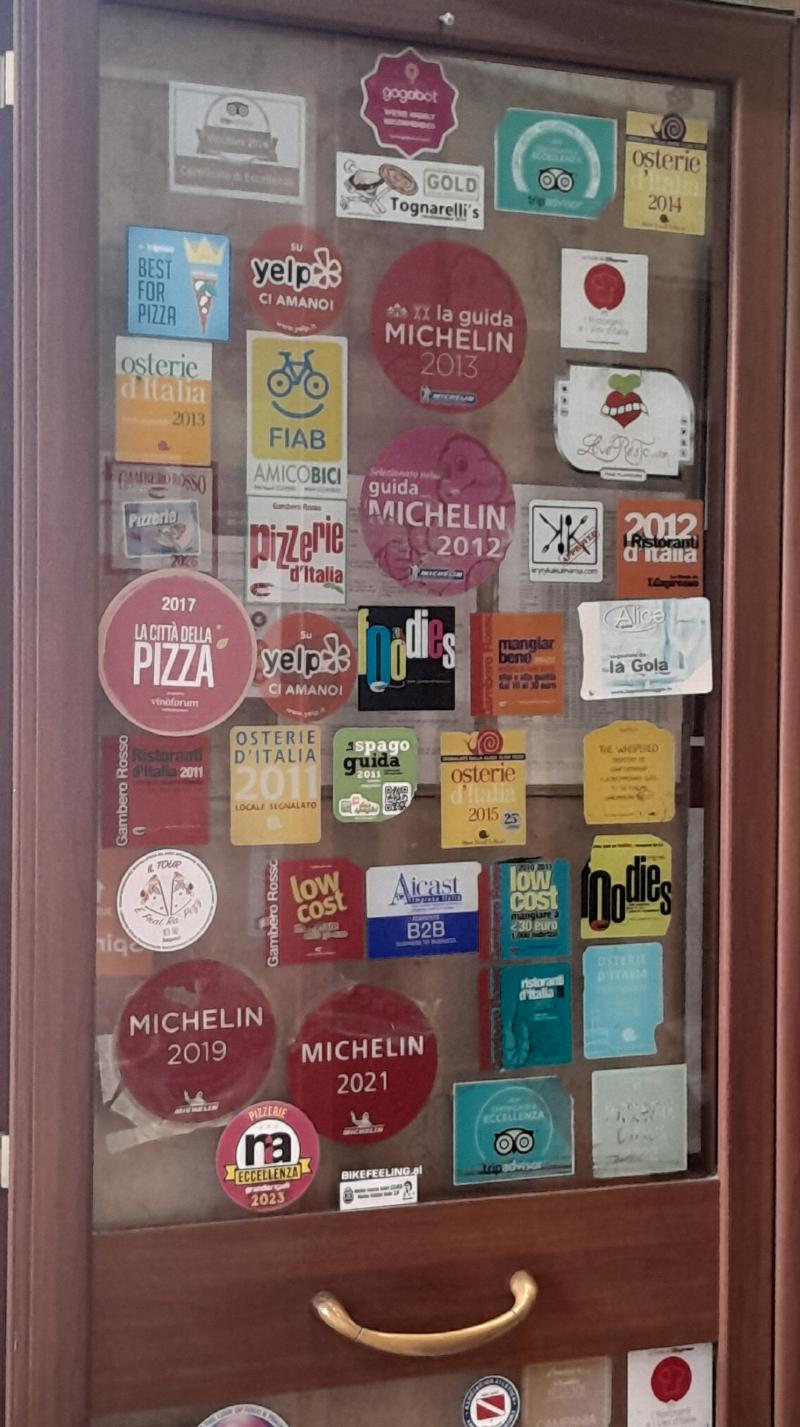
Pizza. Naples is known for its pizza. This is the queue outside L’Antica Pizzeria da Michele, which has been open since 1870. They have two pizzas on the menu — Margherita and Marinara (They also list Cosacca which is not available and Marita which is 50/50 Margherita and Marinara). There is a ticketing system. Pizzas cost €5, takeaway. They take only cash.

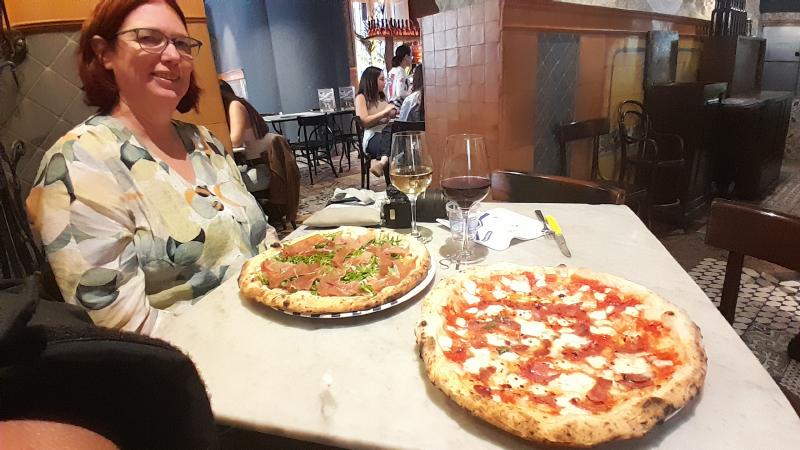
Pricewise, they are probably the best pizzeria in town. But if you can only get to one Naples pizzeria, rather go to Gino Sorbilo.  The pizzas are more expensive and there’s a Copperto (cover charge), but you get to sit down and relax and have some wine rather than standing in a queue for take-aways.

A Rudolfo (€10.50), a Diavolo (€8.50), two glasses of wine at €3.50 each, and  a €2 Copperto per person for a total of €30.

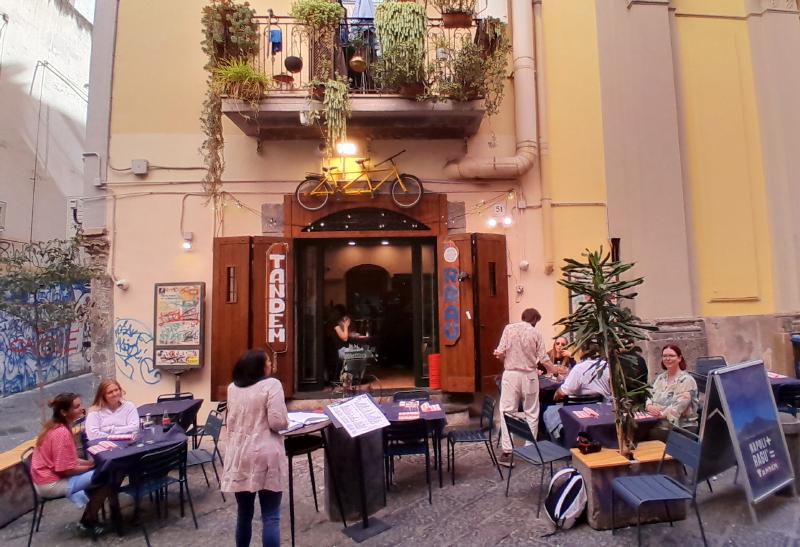
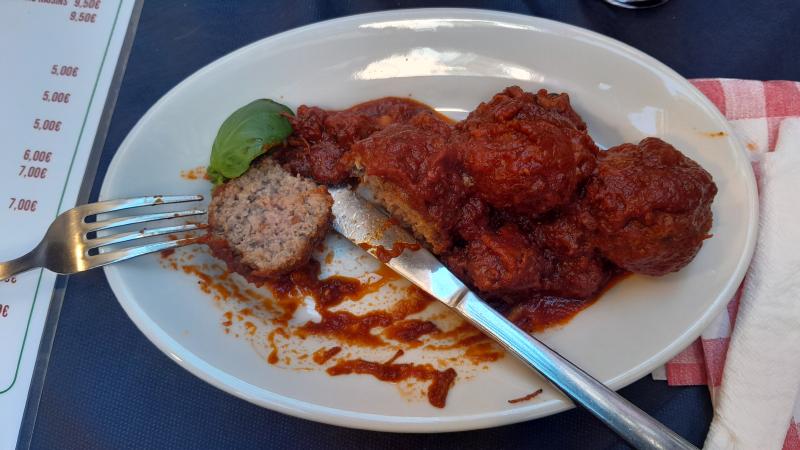
Ragù. Naples is also known for its Ragù. The place to be, they tell me, is Tandem Ragu. I went a little apeshit, had both the lasagna and the polpette. Tanya had spaghetti ragù. That, with half a litre of white (Falanghina) and 3/4 of a liter of red (Aglianico) and two x 5€ Copperto set us back €60.50. Yowch. But when in Napoli…


Sfogliatelli. I’m pretty sure I took a photograph but I can’t find it. Sfogliatelli are a filled pastry, and you get them from Attanasio.

Some more pics:


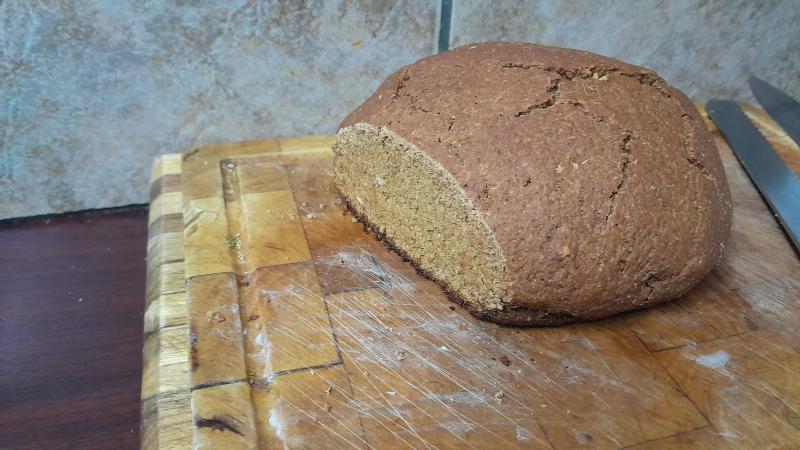
On April 19th, I made bread.

So sayeth the graffiti on the walls of Pompeii’s gladiator barracks. Although, it could be innuendo, who are we to know.

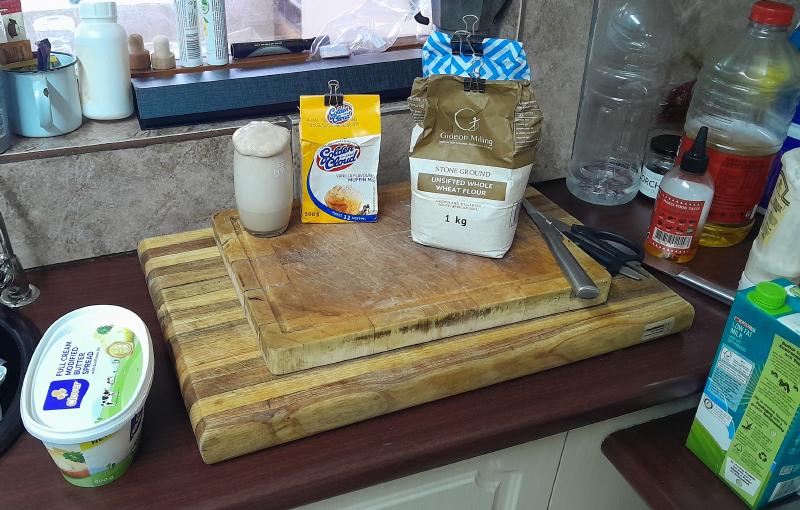
I had some leftovers of the floury persuation (vanilla muffin mix? Yea why not (there wasn’t a whole lot in the bottom of the packet)) and some decade-old molasses, resulting in Yet Another Experiment in Bread.

Didn’t rise as much as I would have liked, but not bad at all.

Note to self, for next time: 1/4 cup melted butter(ish), 1/2 cup warm milk, yeast/sugar/water, little bit of muffin mix, 3/4 kilo whole wheat, some self-raising, 1/2 cup high-test molasses, and of course a bit of salt.

Munz goes to China

Earl Munz was a 1940s salesman who realised that about half the components in the television-sets-du-jour were only needed in edge cases, and he (correctly) reasoned that there was a lucrative market in the middle. Removing (“diking“) the “excess” components resulted in a cheap TV that worked well enough in the city. Reliability was actually improved, because fewer components. Yea well, that was then. This… is now.

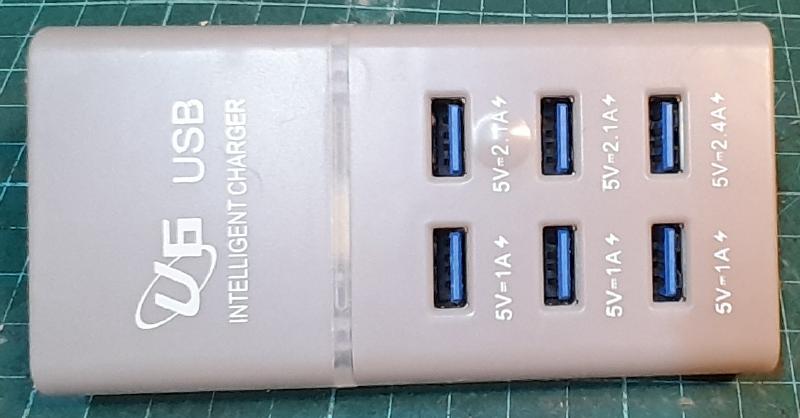
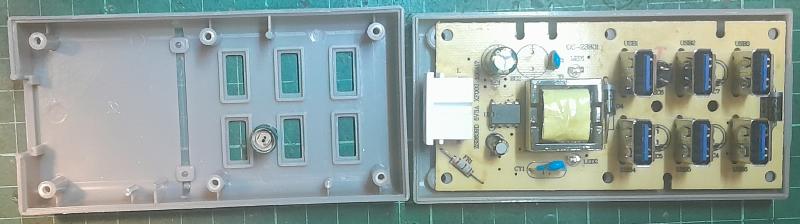
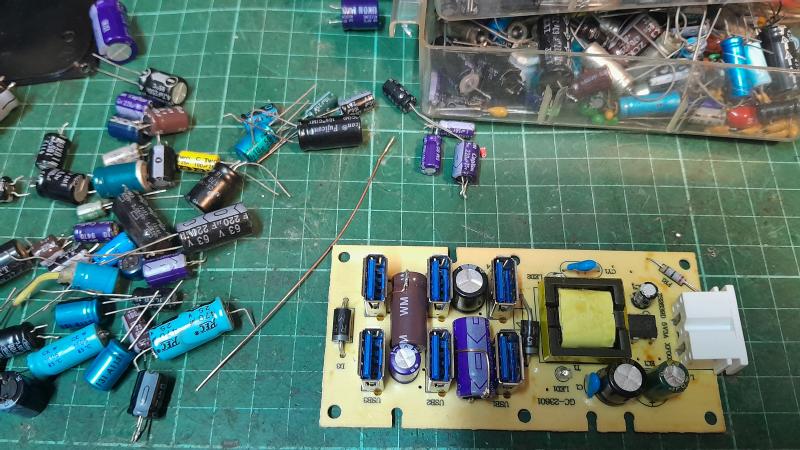
Here we have a USB power hub from the good fellows over at the Value Store. Chinesium AF. It lasted… surprisingly long. Maybe a whole six months in service. Whoop whoop. Note the suspicious-looking bulge under the one “5V 2.1A” port*.

Some force was required to pull it apart, because the bulge is a capacitor that got hot and welded itself to the plastic top.

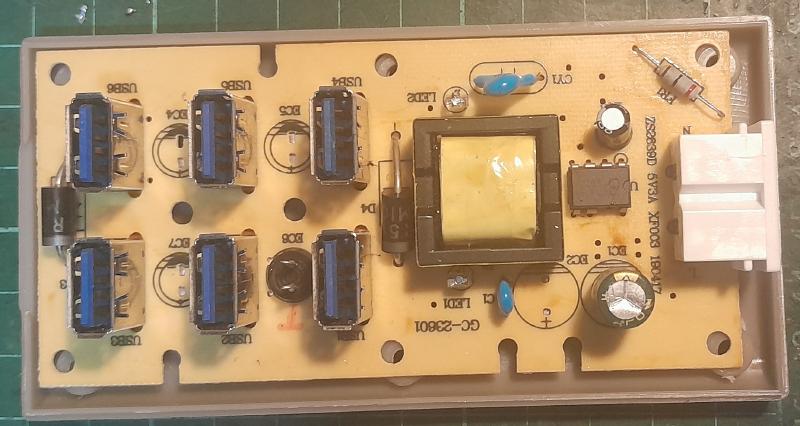
Hmmm. Space for four capacitors, but only one fitted (and “EC2” in the high-voltage department also got diked).

The casualty is marked “1000uF 10V Low ESR 105C”. And it’s 8×12, maybe 8.5×13, which at current capacitor density (assuming they’re not lying about the “Low ESR) is either 470uF at 10V or 1000uF at 6.3V, and that’s pushing it. I suspect the latter, 1000uF at 6.3V (USB is 5V, so that’s OK, right?).

So, the majority of capacitors got Munzed, and then the solo remaining  catyarid failed after carrying the load for too long.

So I fixed it with what I had on hand. Almost 3500uF at mostly 25V (I also added some low-value SMD on the other side). The high-voltage cap I added is only 2.2uF at 400 (the one that was on there is marked “10uF 400V” and it’s the smaller of the two).

* For the record, all six ports are in parallel. All have the same capacity. Which might be 2.1A for all six combined**.
** There is provision for USB-PD resistors, but they are also not fitted.

More horrors

If you buy a car that has had many previous owners (and both the Kombis* qualify) you will find some horrors just below the surface (cue Jaws music).

Like the ABS light “fix” I blogged about earlier.

Or this one:

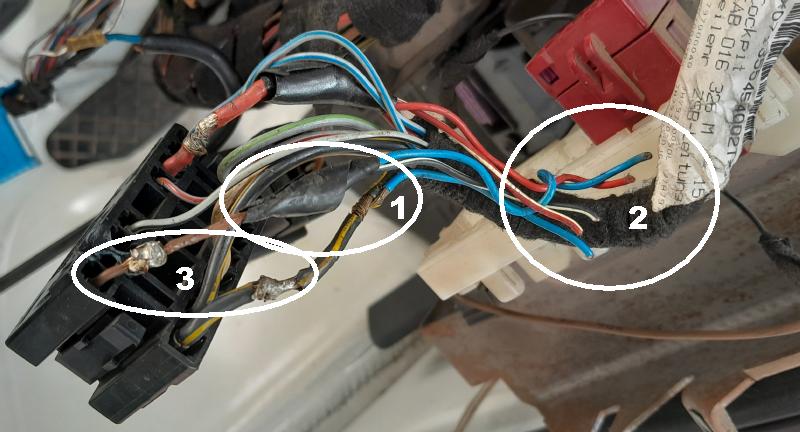
  1. Just wrap the wire nice and tight, it’ll hold…
  2. …then cut them off and abandon them when we don’t need it no more.
  3. At least this dude had a soldering iron.

All of this much better when covered with various layers of insulation tape of varying quality.

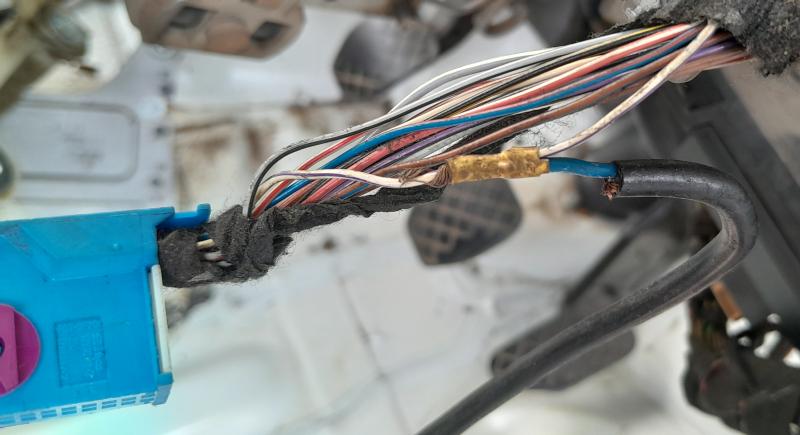
This guy did a slightly better job, he used the back half of a crimp connector to connect his repurposed household twin (i.e. mains) wire to the white/lilac (being lights) wire to the cluster.

And of course I am in here because I am doing my own thing. Hopefully the next owner doesn’t curse me :-) (For the record, solder and heatshrink tubing works for me).

* Ah yes I bought two** Kombis. That’s another story.
** Or three, depends on how you count.

VW T5: Testing 7H0 927 803 / 7H0 927 804

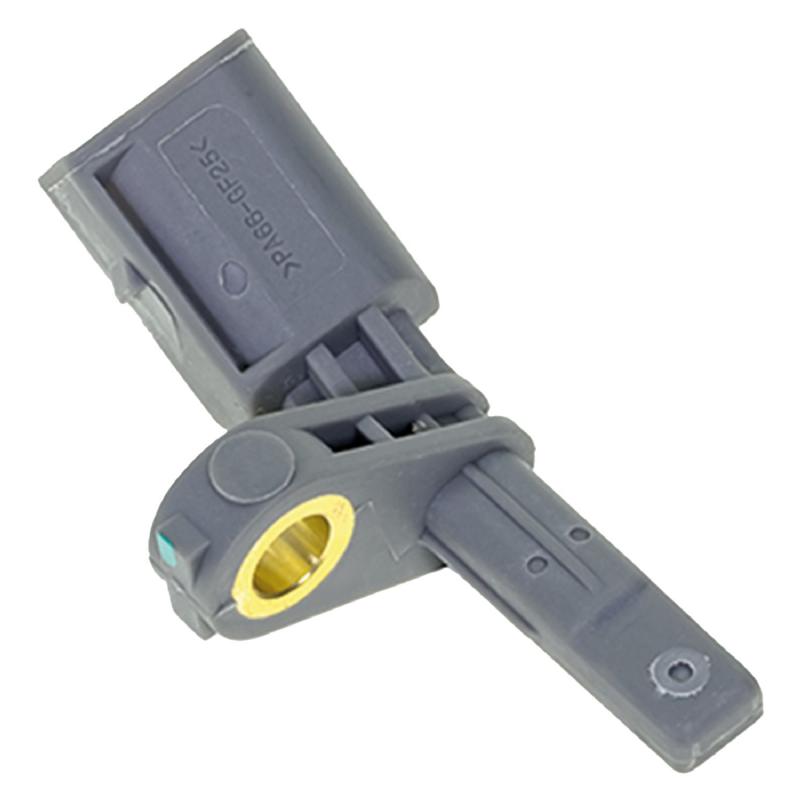
The days of passive sensors in cars are over. Have been over for a long time, because this is the ABS wheel speed sensor used in 2004+ T5 VW transporters, and it has a bunch of electronics inside (I’m guessing similar to this device).

It’s a two-pin device, and if you try to measure the resistance, you will get ~4.5 megohm. A component tester will tell you it’s two back-to-back diodes, one with Vf = 0.7V the other around 3V.

So, connect 12V to pin 1 (the flat side of the connector) via a 1 kohm resistor, and 0V to pin 2. Multimeter to pins 1 and 2. You will see the output voltage (i.e. the current through the resistor) change when you wave a magnet around the business end of the sensor.

In my case, the sensor was not the problem.

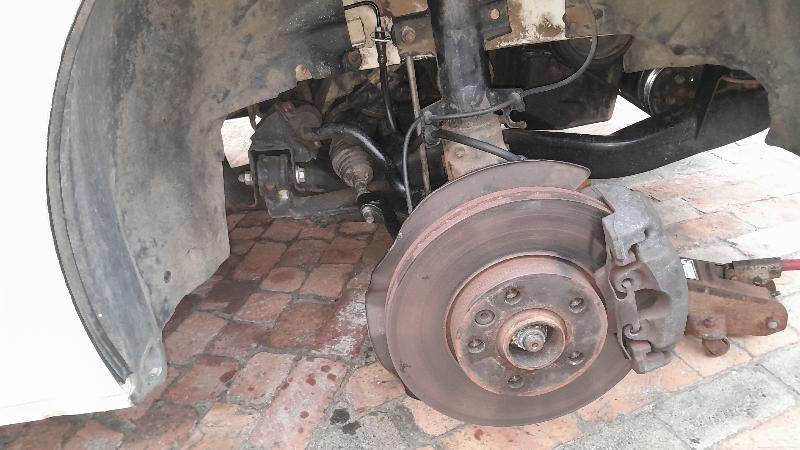
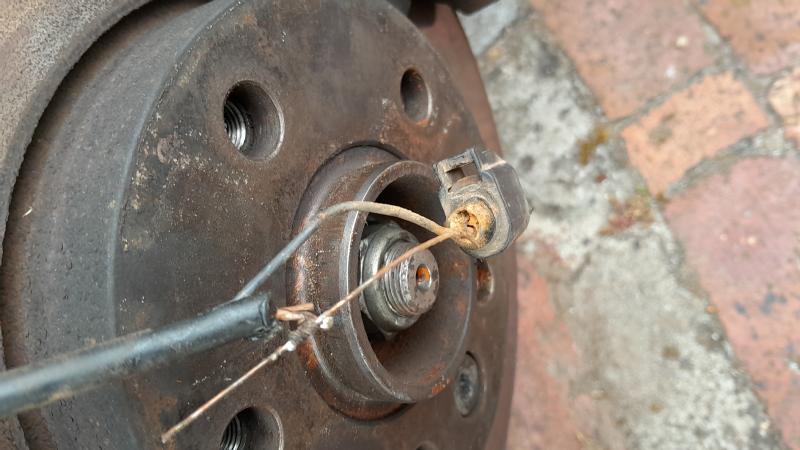
This was the problem. This “fix” (being a stiff wire rammed down into the connector to make contact with the sensor pin, all wrapped up in insulation tape) didn’t last long, I guess, so they resorted to Plan B.

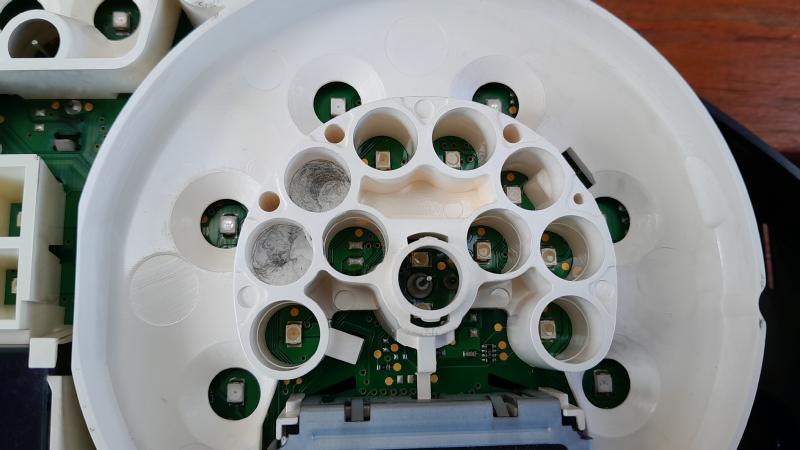
This… was their Plan B. Remove the cluster, disassemble the cluster, cover the warning lights (ABS and Traction Control) with funny putty, and re-assemble*. A two-hour job, rather than the half hour it took me to replace the connector end with a good one from the spare, with good solder joints and heat shrink tubing. Doing the job right. What a novel concept.

And of course it took me more than two hours to sort out the cluster. Getting the funny putty out is much more work than putting it in.

* My brother tells the story of the fellow who took his car in because fifth gear did not work. Guy fixed it for R100 in parts and half an hour labour — he replaced the gear shift knob with one from a four-speed.
One Pot Pasta

The Internet abounds with quick-and-easy recipes. An example being One Pot Tomato Basil Pasta Recipes. In general they are either not that quick-and-easy, or not very good.

But with a bit less quick-and-easy, they can be relatively easy, still quick, and quite tasty.

I started with this keyingredient recipe. As a guideline. So.

One onion, mandolined. Stuck half of it in a pot with some of the fat drippings I keep in the fridge from previous projects, added one small diced smoked chicken breast, fried that up a little.

Added half a tin of leftover chopped tomatoes and a diced yellow pepper from the freezer from back when they were selling then cheap. Left it going while I halved and salted a punnet of cherry tomatoes. Added dried chillies and oregano as recommended, one vegetable stock cube, a tablespoon of chicken stock powder, a litre of water, the tomatoes and the other half of the onions, and a third of a pack of screw noodles.

The latter was a mistake — these screw noodles went a lot quicker than I expected so they were a bit mushy in the end, which came more quickly than I expected.

Fished everything out with a slotty spoon, reduced the sauce, added everything back together and added a bunch of basil leaves.

It was damn tasty I tellya.


Down at the stern

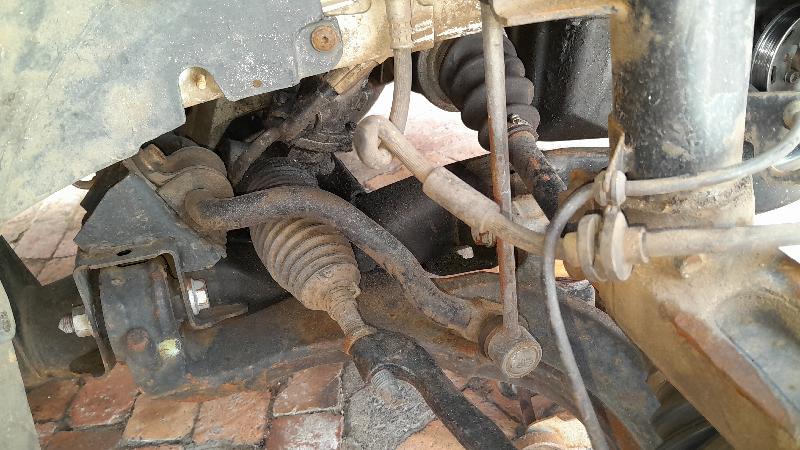
On our recent Kruger trip, the Golf was decidedly down at the stern. The teardrop does not put a lot of weight on the tongue, on this same trip we got stuck up a dead end “road” and I had to unhitch, pick it up and turn it… I’d say about 30 kilos or so. But there’s a case of beer and a case of wine and a fridge in the back of the Golf, and the springs are getting old…

OK, so there are many options for springs for the Golf 4s, but the Estates already have the strongest ones fitted. Fortunately there’s a cheap and easy fix.

That’s the Golf (five green) at the top, and a Tiguan spring at the bottom.

And it’s easy to change, and it works.

Before and after.

Important! (I did not realise) Loosen the rear axle bushes, drive the car a bit, and re-tighten. If you don’t, the bushes are permanently stressed and this might be why mine went (OK, having 580 000km on the clock, maybe I should expect some wear & tear).


Köszeg

So we decided to drive to Köszeg (in Hungary) for the day, hoping to escape the rain.

It didn’t work :-/

But we had a very nice lunch at Kékfény Êtterem és Pizzéria — Bolognese for Tanya, a burger for Pieter, and I had the Rántott trappista hasábbal (aka Smazeni Syr), three beers and a lemonade, all for ~R800.

Then we went to look for a wine bar of some type. Google Maps showed Tóth Pincészet Borház but it’s not there. It’s actually 30m down the road from the Google pin, and I only found that out the next day playing on my PC.

We did find a sports bar kind of place but it was getting late and they have a zero tolerance thing going to we decided to go home.

Köszeg is a beautiful town, will have to return when the sun is shining.